
Oak Hill Address History Sources
Previous residents of an Oak Hill address rarely appear in one complete roll. Property records identify owners, while directories and census schedules identify households. A deed can establish a transfer without proving that the buyer moved into the house. A directory may list an adult at the address without proving ownership. The best answer comes from matching records made near the same date, then keeping the source and date with each name. Fayette County records also sit in several places. Current tax data is online, deeds within the advertised period begin at the county clerk, and older books may require the county record room or West Virginia Archives.
| Source | Available period | Custodian | Best evidence |
|---|---|---|---|
| Recorded deeds | Online coverage advertised from 1981 | Fayette County Clerk | Parties, book/page and legal description |
| City directories | Listed editions from 1970 through 2016, with gaps | WV Archives and History | Names tied to a place in a given edition |
| Federal census | Public schedules through 1950 | National Archives | Households and enumeration location |
| Sanborn maps | Oak Hill sheets from 1926 and 1942 | WVU Regional History Center | Buildings, street context and map-era footprints |
| Newspapers and local collections | Runs vary by title and collection | Fayetteville Public Library | Obituaries, notices, clubs and family context |
Start near the target year. For a recent transfer, use the IAS real-property search to locate the parcel and current book/page reference. For a mid-century household, check the Archives directory list and the public census. For an earlier structure, maps and newspapers may establish the place before a person can be tied to it. A missing online hit is not proof that no record exists. It may sit before the portal cutoff, in an unindexed volume, or only at an office.
Oak Hill Records Live Elsewhere
Oak Hill is in Fayette County, but Fayetteville is the county seat. That matters when a search moves from a city address to a deed, will, estate file, or county index. The Fayette County Clerk is at 100 Court Street, Suite 1, in Fayetteville. The main clerk number is 304-574-4225, and the record room is 304-574-4262. County offices generally publish weekday hours of 8:00 a.m. to 4:00 p.m.
Ask staff which index covers the year and record type before traveling. The county page says deeds are online from 1981 to the present and most other categories from 1993 forward unless noted. Older material may remain in the county record room or on archive microfilm. Give the parcel ID, district, map, parcel suffix, tax year, names, and any book/page already found. These details make it far easier to separate the right Oak Hill property from a similar street or name elsewhere.
Note: Search results for Fayette deeds can point to Kentucky, so confirm West Virginia domains and the Fayetteville courthouse address before relying on them.
Start Oak Hill History Today
The current assessor record supplies the bridge into the older trail. IAS exposes parcel ID, state class, address number, street, ZIP, owner fields, book, page, tax year, and jurisdiction. Preserve the full parcel key and tax year exactly as shown. A street address can be restyled, while a legal parcel reference is more stable across tax, map, and deed systems. The assessor record still needs care: its owner field reflects assessment work and is not a certified title opinion.
The Fayette County Assessor contact page gives separate channels for real estate and mapping. Real estate staff can be reached at 304-574-4239 or 304-574-4240; mapping and GIS uses 304-574-4353. The office is at 100 Church Street in Fayetteville. Current cards are best checked with staff when the web view is unclear.
The county's contact page shows the human route behind an Oak Hill previous-residents search.
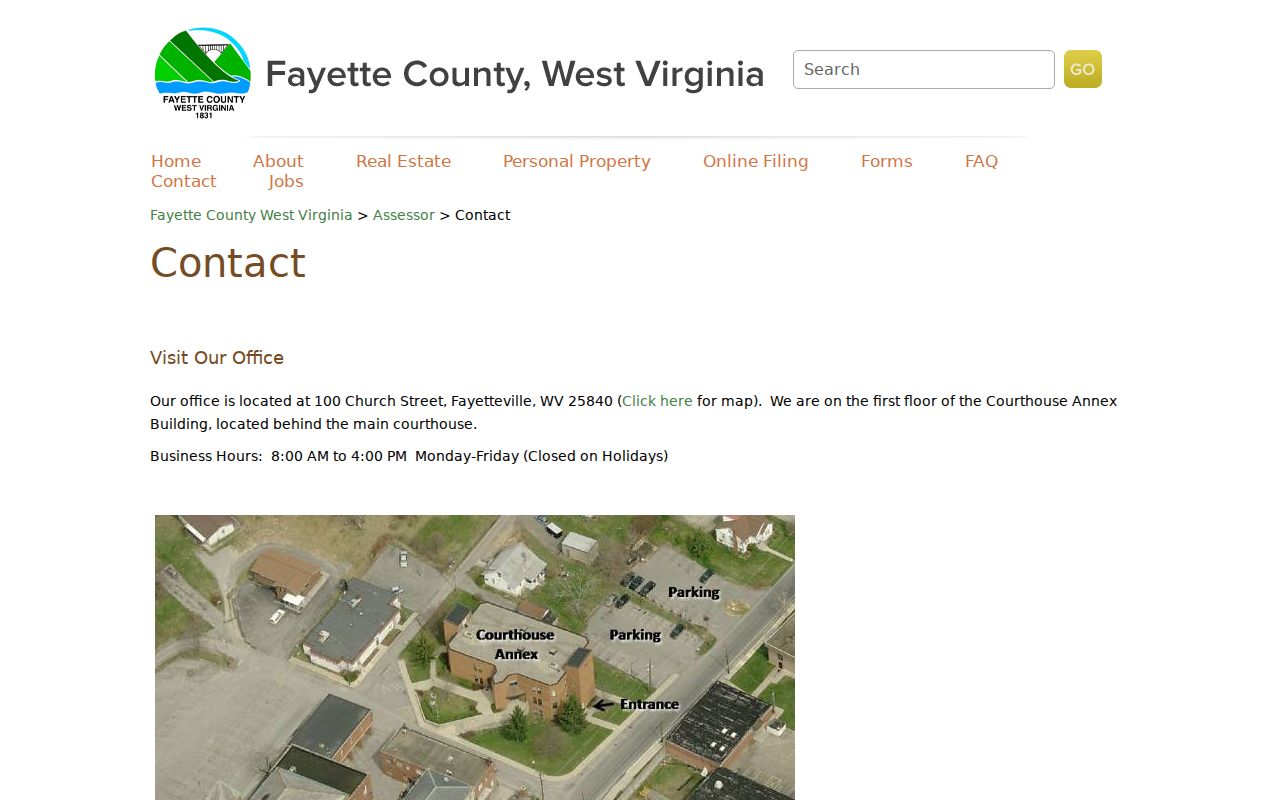
Use those numbers to resolve a parcel or map question before carrying an incorrect identifier into the deed books.
The Fayette County Assessor disclaimer also states the limits that apply before an Oak Hill address trail moves into deed research.
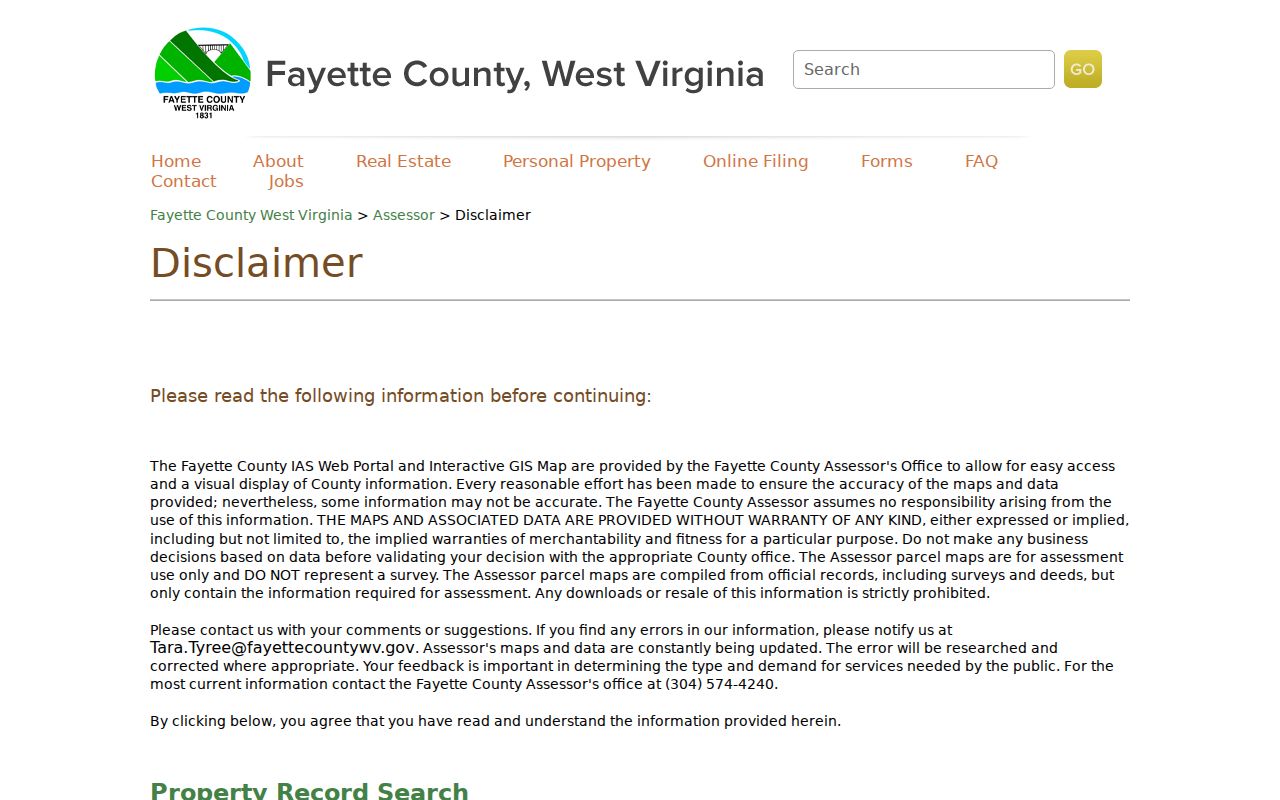
The warning makes clear that assessment maps do not replace a survey, certified record, or current verification from the office.
Oak Hill Sanborn Address Time
Sanborn fire-insurance maps are an address time machine, not a residents list. The WVU Regional History Center collection identifies digitized Oak Hill sheets from 1926 and 1942. The record describes 11 TIFF files totaling about 2.09 GB. A sheet can help establish a building footprint, street layout, construction note, or nearby rail feature for the map year. It cannot establish who occupied the building on its own.
Pair a 1926 sheet with a directory or Fayette Tribune issue from the same era. Pair a 1942 sheet with the 1940 or 1950 census and wartime newspaper coverage. Record the sheet number, intersection, map date, building label, and source identifier. If the address spelling differs, compare the street grid and legal parcel description instead of forcing a match.
The collection record confirms the dates and repository route for these Oak Hill maps.
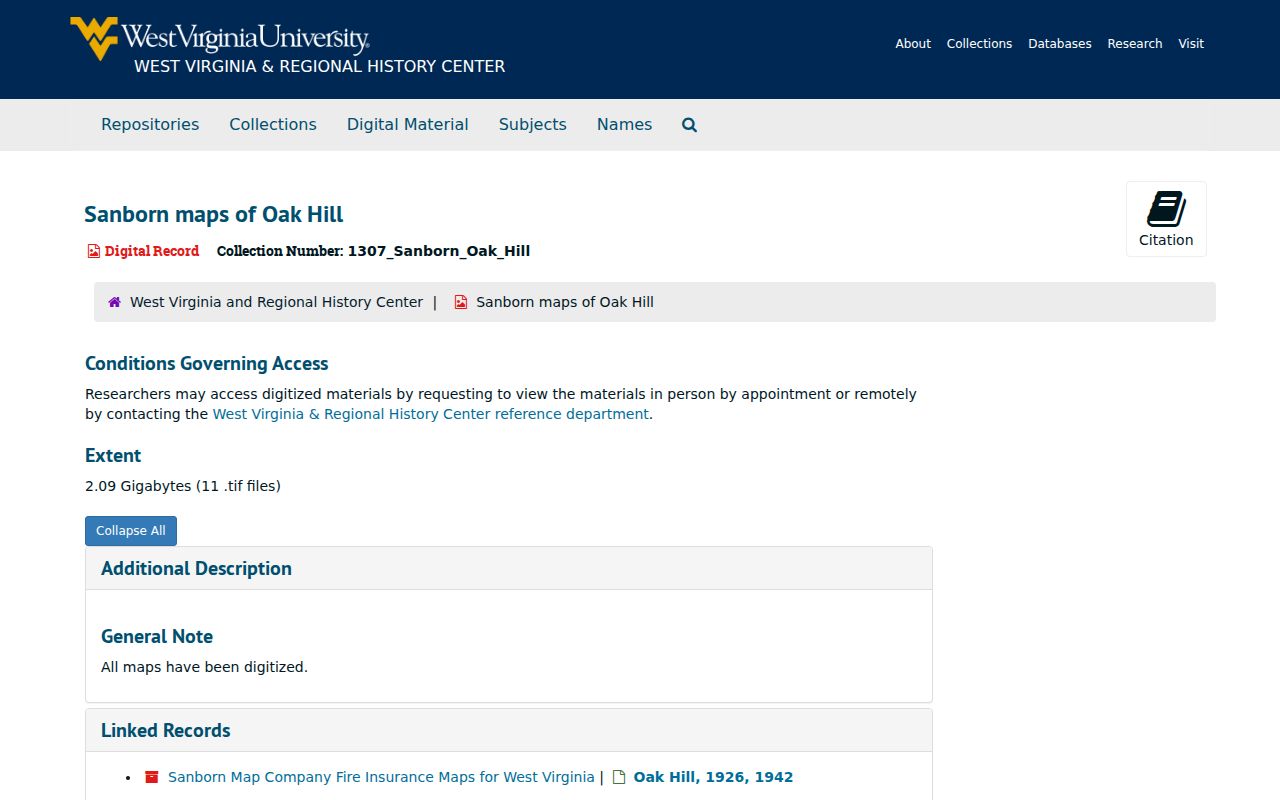
The image is a collection page, so request or open the actual TIFF before making a claim about a particular house.
Trace Fayette County Deeds Backward
A chain of title is the linked series of transfers for one parcel. Begin with the present tax card, then find the recorded instrument referenced there. On a deed, the grantor is the person or entity transferring an interest; the grantee receives it. To move backward, search the current owner as grantee to find when that owner acquired the property. Then use the seller from that deed as the next grantee search. Keep names, dates, instrument numbers, book/page, and the legal description at every link.
- Copy the parcel key, present owner, book/page, and legal description from the assessor record.
- Locate the current acquisition deed through the county clerk's recorded-record route.
- Read the grantor name, then search that party as a grantee for the prior acquisition.
- Repeat while the description and parcel identity remain consistent. Do not link properties on name alone.
- When the trail reaches the online cutoff, call the record room or request the older index and deed book from the archives.
- Grantor and grantee
- The grantor transfers an interest. The grantee receives it.
- Chain of title
- The sequence of recorded transfers connected to the same property.
- Legal description
- The formal land description in an instrument, often more reliable than an old street number.
- Book and page
- The volume and page reference used to retrieve a recorded instrument.
Mortgages, deeds of trust, releases, liens, leases, wills, and fiduciary records may explain a gap without showing a sale. When an owner died, probate may connect an heir or fiduciary to the next deed. The county's 1893 courthouse fire is part of Fayette record history, but it should not be blamed for every early gap. Some material survives from the county's 1831 beginning. Ask for the neighboring index volume or archive microfilm before concluding that a link was lost.
Match Oak Hill Directory Years
The WV Archives city-directory inventory groups Oak Hill with Fayetteville and Mount Hope. Listed editions include 1970, 1972, 1973, 1975, 1977, 1979, alternating years through the 1990s, 1996 through 1999, 2001, 2007 through 2010, and 2016. Gaps are real in the list. Do not imply that an unlisted year has an edition or that each book covers every Oak Hill address.
Use the directory closest to the date of interest. Then move one listed edition earlier and one later. That three-point check can reveal a stable household, a move, or an address that vanished from the printed coverage. Publisher details, entry fields, and reverse-directory format were not captured in the research, so inspect the actual title page and abbreviation key before interpreting a mark beside a name.
Ask the archive for access conditions and the geographic scope of the edition before treating its inventory as a full city roll.
Connect Oak Hill Census Households
Census schedules give a household snapshot, not a current address result. The 1950 Census search identifies Oak Hill enumeration districts including areas northeast and southwest of West Summerlee and a southeast section. An enumeration district is the area assigned to one census taker. Handwritten names may be misread by optical character recognition, so browse the images when a name search fails.
- Choose the directory edition nearest the public census year and copy the address exactly.
- Use the city, county, and enumeration-district description to narrow the census images.
- Compare household names and ages with the directory, but keep each source's date distinct.
- Check the next directory edition and a deed or newspaper item before treating a match as the same family.
Historic Oak Hill communities can change the search terms. The National Park Service documents Harlem Heights through Lincoln, High, and Lewis streets, plus its school, churches, civic groups, and historic voting precinct. Rail and annexation history also affect place names. A modern mailing label may not be the best term for a mid-century record.
Find Oak Hill Trail Endpoints
The Fayetteville Public Library archives provide the strongest documented local fallback when a web search ends. Holdings include Fayette Tribune and Montgomery Herald runs, old directories, cemetery books, yearbooks, family collections, photos, Oak Hill Garden Club scrapbooks, and Sports Festival photo books. Ask for the exact reel, year, and access conditions. Newspaper runs have gaps, so a missing obituary in one date range may require another title or a county vital index.
An obituary can connect relatives, a former residence, a funeral place, and a date. A cemetery book can add a grave location. Probate can explain how an owner's interest passed. None proves that every named relative lived at the same Oak Hill house. Capture page and column, wording, publication date, and the record that independently ties the person to the address.
This assisted library route is useful for family and community history that a modern portal cannot answer. Its archive tabs can bridge directories, news, cemetery material, and family files.
Separate Oak Hill Owners and Residents
Past owners and previous residents are different groups. A tax card and deed concern ownership. A directory or census can place a household at an address for a specific year, including people who did not own the parcel. A permit may name an owner or applicant without proving who lived there. Keep an evidence log with one row per claim: person or entity, address as printed, record type, date, source, and what the record actually establishes. The underlying collections are described more fully on the Oak Hill directory book page.
Mark uncertainty rather than merging similar names. An initial, nickname, remarriage, or business name can create false links. When the goal is to learn who lived here before, seek two sources close in time and one stable property key. The legal description is ideal for land; the enumeration district and street image are better for a census household. A death notice or probate file can close the trail, but it does not make every survivor an occupant.
Lawful use. Oak Hill previous-residents research belongs in house history, genealogy, and civic study. West Virginia law does not permit stalking, threats, harassment, or attempts to defeat a protected address.
The West Virginia Address Confidentiality Program supplies a substitute address and mail forwarding to qualifying survivors. Do not try to reverse that protection. Public records can also be outdated or wrong, so confirm a sensitive fact with the custodian and retain only what the research needs.